Alocasia: A Versatile Font Trio for Designers and Creators
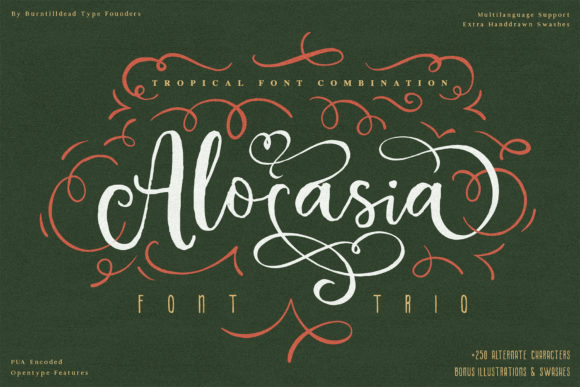
Alocasia is a remarkable font trio that combines the elegance of serif, the simplicity of sans-serif, and the fluidity of script styles into one cohesive package. This font family is designed to meet the diverse needs of designers, illustrators, and content creators who seek versatility without compromising on aesthetics. With its PUA encoding, smooth lines, and rich set of glyphs, Alocasia stands out as a go-to choice for projects ranging from branding to editorial design.
Understanding the Alocasia Font Family
The Alocasia font trio consists of three distinct styles: serif, sans-serif, and script. Each variant offers unique characteristics that cater to different design scenarios. The serif style brings a traditional and refined feel, making it ideal for print media and formal documents. The sans-serif version provides a modern and clean look, suitable for digital interfaces and minimalist designs. Meanwhile, the script style adds a touch of elegance and personality, perfect for invitations, logos, and creative headlines.
What sets Alocasia apart is its attention to detail. The varying baseline ensures that text remains visually balanced, while the smooth lines contribute to readability and visual harmony. Additionally, the font includes a wide array of glyphs and swashes, accessible through PUA encoding, allowing designers to customize their typography with ease.
Comparing Alocasia with Similar Font Families
When considering alternatives to Alocasia, it's important to evaluate how each font aligns with specific design goals. Fonts like Cinzel or Playfair Display offer similar serif styles but may lack the comprehensive trio structure that Alocasia provides. Similarly, sans-serif options such as Montserrat or Open Sans are popular choices but often do not include a script variant.
In terms of versatility, Alocasia holds an edge over many other font families. Its ability to transition seamlessly between styles means that designers can maintain a consistent brand identity across various platforms and mediums. For instance, a designer working on a website might use the sans-serif version for body text and switch to the script style for call-to-action buttons, creating a cohesive yet dynamic visual experience.
Strengths of Alocasia
- Versatility: Alocasia's trio format allows it to be used in a wide range of applications, from web design to print materials.
- Customization: The PUA encoding makes it easy to access special characters and alternate glyphs, enhancing typographic creativity.
- Readability: Smooth lines and balanced baselines ensure that text remains legible even at smaller sizes.
- Aesthetic Appeal: The combination of serif, sans-serif, and script styles offers a visually appealing solution for diverse design needs.
Potential Limitations and Tradeoffs
While Alocasia offers significant advantages, there are certain considerations to keep in mind. For example, the font may require more system resources compared to lighter alternatives, which could be a concern for users working on low-end devices. Additionally, while the script style adds character, it may not be suitable for all contexts—such as long-form text where readability is paramount.
Another factor to consider is licensing. Depending on the platform or tool being used, additional costs or restrictions may apply. It’s essential to review the licensing agreement to ensure that the font can be used for the intended purpose, whether it's for personal projects or commercial use.
Best-Fit Situations for Alocasia
Alocasia shines in situations where a designer needs a single font family that can adapt to multiple design elements. For example, a marketing team developing a campaign might use the serif style for printed brochures, the sans-serif version for website copy, and the script style for social media posts. This approach maintains brand consistency while allowing for visual variety.
Similarly, Alocasia is well-suited for creative professionals working on editorial layouts, where the ability to switch between styles can enhance the visual storytelling. The font's alternates and swashes provide opportunities for customization, enabling designers to create unique typographic treatments without the need for multiple fonts.
In contrast, if a project requires a highly specialized font—for example, a technical document that demands strict typographic rules—Alocasia may not be the best fit. In such cases, a more restrained and uniform font might be preferable to avoid visual distractions.
Realistic Examples and Practical Applications
Consider a scenario where a small business owner is designing a new logo and website. Using Alocasia, they can leverage the script style for the logo to add a personal touch and then use the sans-serif version for the website's body text to ensure clarity and professionalism. This approach not only streamlines the design process but also reinforces brand identity through consistent typography.
Another example involves a wedding planner creating save-the-date cards. Here, the script style of Alocasia would be ideal for the main message, while the serif variant could be used for the event details, offering a classic and elegant aesthetic that complements the occasion.
For those working on digital content, such as blog posts or e-books, the sans-serif version of Alocasia ensures that the text remains easy to read on screens. Its clean lines and balanced structure make it a reliable choice for long-form content where readability is crucial.
Decision Factors When Choosing Alocasia
When deciding whether Alocasia is the right font for a project, several factors should be considered. First, assess the primary use case—whether it's for print, digital media, or both. Next, evaluate the design requirements, including the need for stylistic variation and typographic flexibility. Finally, consider the technical aspects, such as file size and compatibility with design software.
If a project demands a high degree of customization and visual diversity, Alocasia is likely to be a strong contender. However, if simplicity and minimalism are the priorities, exploring alternative fonts that focus on a single style might be more appropriate.
Ultimately, the decision to use Alocasia should be based on the specific needs of the project and the desired outcome. By carefully weighing these factors, designers can make informed choices that enhance their creative work while ensuring practicality and effectiveness.